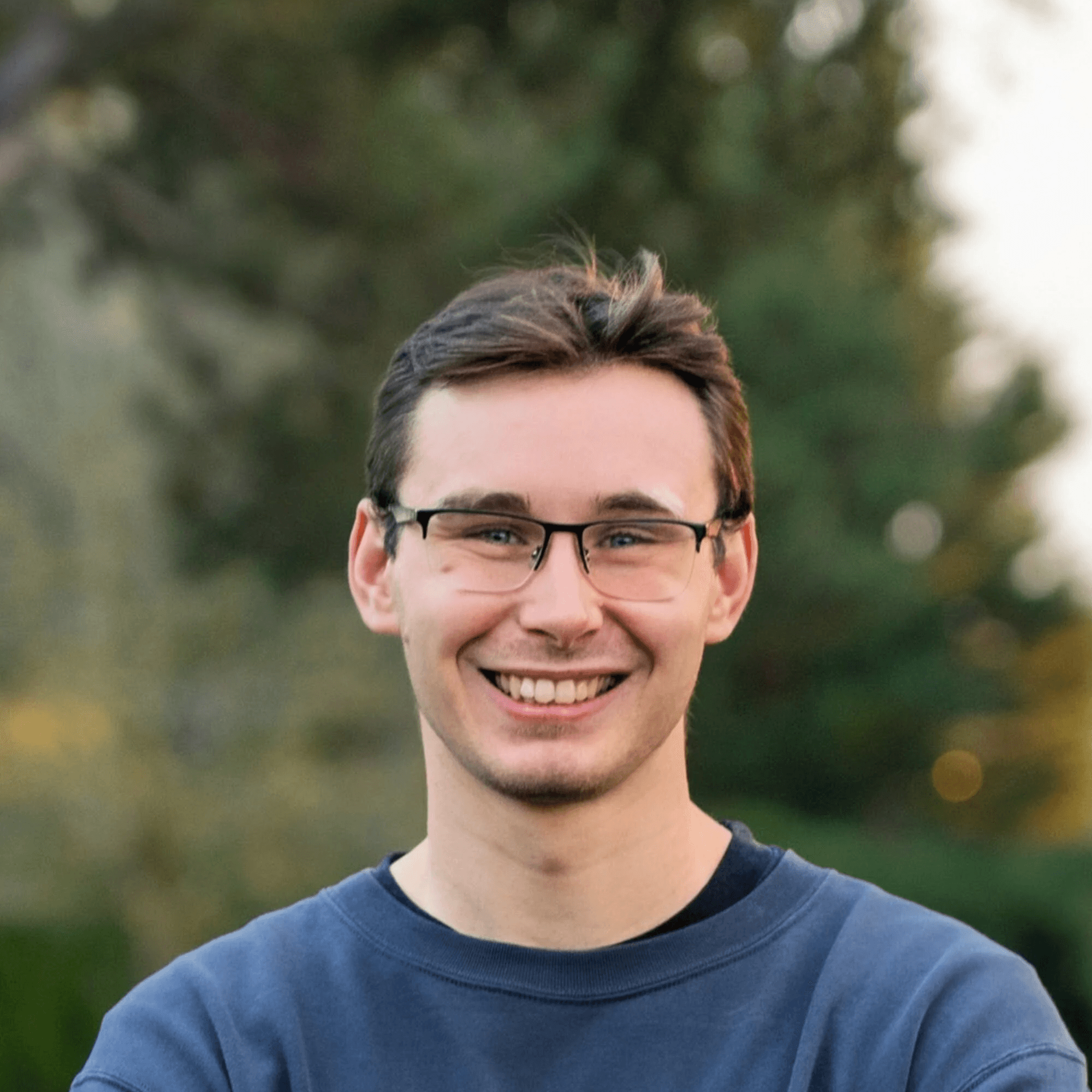


Thomas Owens
Senior Laboratory Technician
Thomas brings to ExEd experience supporting large research projects with a particular strength in molecular and cell biology. Tom’s role supports both the scientific and laboratory operations within ExEd, he works closely with all wet lab members bringing cohesion to the team.
Bio
Thomas completed his MSc in Stem Cell Technology and Regenerative Medicine at the University of Nottingham, where he developed a strong interest in developmental pathologies. During his research placement at Nottingham City Hospital, he published his thesis work exploring perturbed G-protein-coupled receptor signalling during neonatal lung development, solidifying his passion for understanding early-stage biology. Currently, his work focuses on developing cell technologies and optimising our expression systems at ExEd. Since graduating, Tom has played key research roles within several academic groups across Cambridge, focusing on epigenetics and early regulation of stem cell development pathways. He also brings industry experience from his time within bit.bio’s Cell Type Development team, where he focused on optimising an inducible-expression platform used to program a range of iPSC-derived neural cell types with physiologically relevant genetic backgrounds. This blend of academic and industry experience underpins his current work and continued interest in advancing cell biology.
Thomas brings to ExEd experience supporting large research projects with a particular strength in molecular and cell biology. Tom’s role supports both the scientific and laboratory operations within ExEd, he works closely with all wet lab members bringing cohesion to the team.
Bio
Thomas completed his MSc in Stem Cell Technology and Regenerative Medicine at the University of Nottingham, where he developed a strong interest in developmental pathologies. During his research placement at Nottingham City Hospital, he published his thesis work exploring perturbed G-protein-coupled receptor signalling during neonatal lung development, solidifying his passion for understanding early-stage biology. Currently, his work focuses on developing cell technologies and optimising our expression systems at ExEd. Since graduating, Tom has played key research roles within several academic groups across Cambridge, focusing on epigenetics and early regulation of stem cell development pathways. He also brings industry experience from his time within bit.bio’s Cell Type Development team, where he focused on optimising an inducible-expression platform used to program a range of iPSC-derived neural cell types with physiologically relevant genetic backgrounds. This blend of academic and industry experience underpins his current work and continued interest in advancing cell biology.
Thomas brings to ExEd experience supporting large research projects with a particular strength in molecular and cell biology. Tom’s role supports both the scientific and laboratory operations within ExEd, he works closely with all wet lab members bringing cohesion to the team.
Bio
Thomas completed his MSc in Stem Cell Technology and Regenerative Medicine at the University of Nottingham, where he developed a strong interest in developmental pathologies. During his research placement at Nottingham City Hospital, he published his thesis work exploring perturbed G-protein-coupled receptor signalling during neonatal lung development, solidifying his passion for understanding early-stage biology. Currently, his work focuses on developing cell technologies and optimising our expression systems at ExEd. Since graduating, Tom has played key research roles within several academic groups across Cambridge, focusing on epigenetics and early regulation of stem cell development pathways. He also brings industry experience from his time within bit.bio’s Cell Type Development team, where he focused on optimising an inducible-expression platform used to program a range of iPSC-derived neural cell types with physiologically relevant genetic backgrounds. This blend of academic and industry experience underpins his current work and continued interest in advancing cell biology.
→